
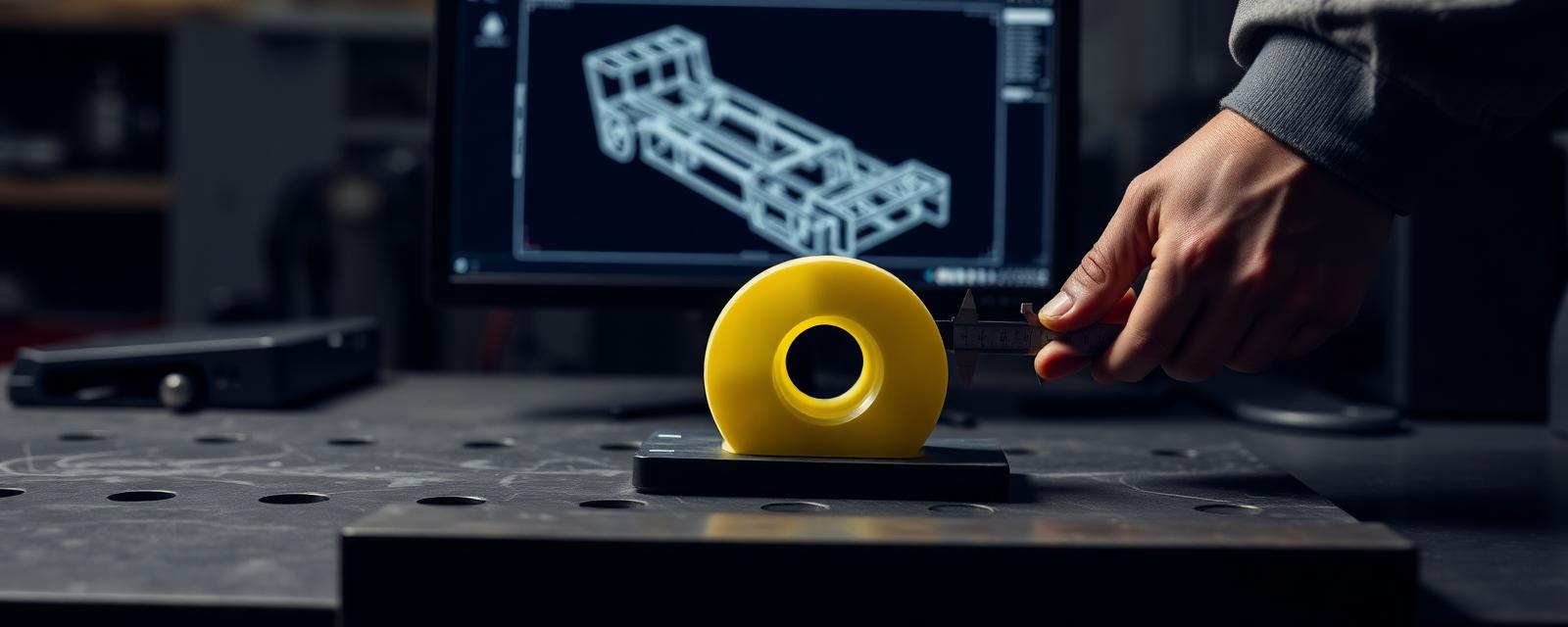
The gap it fills
Between a one-off print and a five-figure injection mould sits a gap: you need twenty or forty identical parts with a production look, and neither extreme fits. Vacuum casting fills exactly that gap. It is the process behind many small-series reproduction parts that owners assume came off original tooling.
How it works
First a master part is produced - typically a high-detail resin print, finished to the exact surface the final parts should have, because the mould copies everything, including flaws. The master is suspended in a frame and encased in liquid silicone; once cured, the silicone is cut open and the master removed, leaving a precise cavity. Polyurethane resin is then poured under vacuum - which removes air bubbles - into the cavity, cured, and demoulded. Each cycle yields one part; each silicone mould survives a limited number of cycles before losing definition.
Why the parts look and feel right
Cast polyurethanes are formulated to mimic production plastics: rigid ABS-like grades for housings and trim, rubber-like grades across a range of hardness for grommets and flexible parts, and options in between. Combined with the master's finished surface, the result reads as a moulded production part - gloss, texture and crisp edges included - which matters for visible interior and exterior components.
Where it wins and where it does not
Vacuum casting wins for series of roughly ten to fifty identical parts, for flexible components, and for cosmetic parts where surface quality is the point. It loses to direct printing for one-offs (the mould overhead is not worth it), to MJF for highly loaded functional parts, and to machining for metal and heat. Mould life also means very large series eventually justify other routes. Like every process, it is a tool, not a religion.
What it means for classic-car owners and clubs
For the classic-car world, vacuum casting is the club-batch process: one owner's original becomes a master, the engineering and mould are paid once, and a whole register's worth of a discontinued knob or grommet comes out at sensible per-unit cost. If your community shares one recurring broken part, this is usually the route we quote.
FAQ
How many parts can one mould make?
A silicone mould typically yields on the order of tens of parts before definition degrades; for larger series we plan multiple moulds from the same master.
Can flexible and rigid parts both be cast?
Yes - polyurethane systems cover rigid ABS-like grades through a wide range of rubber-like hardnesses, chosen to suit the part.
Does the master's quality really matter that much?
Completely. The mould copies the master exactly, defects included, which is why the master is finished to final standard before any silicone is poured.
Have a part you can't source?
Request a quoteRelated
Your project stays yours.
Every part we reverse-engineer and produce is confidential and exclusive to the client. We do not resell, share or reproduce a client's parts for anyone else unless the client explicitly authorises it. NDAs available on request.
Part numbers, vehicle names and model designations are manufacturer references used only to identify components. Replique Labs is an independent manufacturer and is not affiliated with, sponsored by or endorsed by any vehicle manufacturer.